
Full-Service Raccoon Control
Raccoon Removal – Humane Trapping & Exclusion in Southern California
Humane raccoon removal – no poisons, no fogging, no drama. Whether raccoons are in your attic, walls, crawlspace, or tearing up the yard, we trap, remove, and seal entry points so they don’t come right back. We serve homes, HOAs, and businesses across Los Angeles, Orange, Riverside, and San Bernardino Counties.
Why People Choose Us for Raccoon Removal
- No-poison, baby-safe eviction during maternity season.
- Long-term fixes – one-way doors, exclusion repairs, and sealing carpenter gaps so they can’t re-enter.
- Attic & crawlspace cleanup – droppings, insulation, and odor control handled in one plan.
- We’re not a “pump, pray, and spray” outfit. Real trappers get dirty.
- Written estimates up front and clear photos of problem areas and repairs.

Common Signs You Need Raccoon Removal
Raccoons don’t exactly sneak in quietly. If they’ve moved into your attic, crawlspace, or yard, you’ll usually notice one or more of these:
- Loud thumping or rolling sounds in the attic at night.
- Chattering, growling, or baby “chirping” noises around dusk and dawn.
- Insulation pushed down near roof edges, soffits, or attic hatches.
- Scratching in walls as raccoons use wall voids to travel between crawlspace and attic.
- Large droppings and urine stains on insulation, HVAC ducts, or attic flooring.
- Destroyed roof vents, torn shingles, or chewed fascia near roof eaves.
- Trampled plants, tipped trash cans, and paw prints around decks, sheds, and fences.
- Strong musky odor from droppings, urine, and soaked insulation.
If you’re hearing heavy footsteps and rolling sounds — not tiny scratching — there’s a good chance you’re dealing with a raccoon, not a rat. Our technicians can confirm the species and put together the right plan on site.
Where We Find Raccoons in Southern California Homes
Urban and suburban raccoons treat your home like a deluxe den. They don’t just stick to one area — they use multiple “zones” around your property:
Attic Raccoons
The attic is prime real estate for raccoon moms. It’s dry, quiet, and lined with soft insulation. We often find:
- Nesting bowls burrowed into attic insulation.
- Heavy droppings and urine trails along their main travel paths.
- Damaged ductwork and chewed wiring near their routes.
Once they’ve used your attic as a nursery, the odor can keep attracting raccoons year after year unless it’s properly cleaned and deodorized. Ask us about pairing removal with attic cleaning & restoration (if you have or plan to build that page).
Crawlspaces, Walls & “Carpenter Gaps”
A lot of raccoon traffic starts under the house. They use the crawlspace as a highway, then climb up inside wall voids and pop out through open eaves, loose soffits, or what we call “carpenter gaps” — those unfinished corners where building trades leave small voids because water can’t get in, but wildlife eventually does.
We routinely combine raccoon removal with crawlspace cleaning & deodorizing and exclusion upgrades to seal those hidden routes for good.
Yards, Trees, Sheds & Rooflines
Not every raccoon is in the attic yet. Many of our calls start with:
- Raccoons raiding pet food on porches or in backyards.
- Animals using palm trees, fences, and rooflines as nightly travel routes.
- Nesting under decks, sheds, or elevated patios.
- Raccoons living in commercial roof parapets and warehouse rafters.
Whether they’re already in your structure or circling it, we design a plan that fits the layout of your property and how raccoons are using it.
Our 4-Step Raccoon Removal Process
Every raccoon job is different, but our process is always the same: Inspect → Remove → Seal → Clean. That’s how we stop today’s noise and reduce the odds of tomorrow’s infestation.
Step 1 · Inspection
Full Attic & Crawlspace Inspection
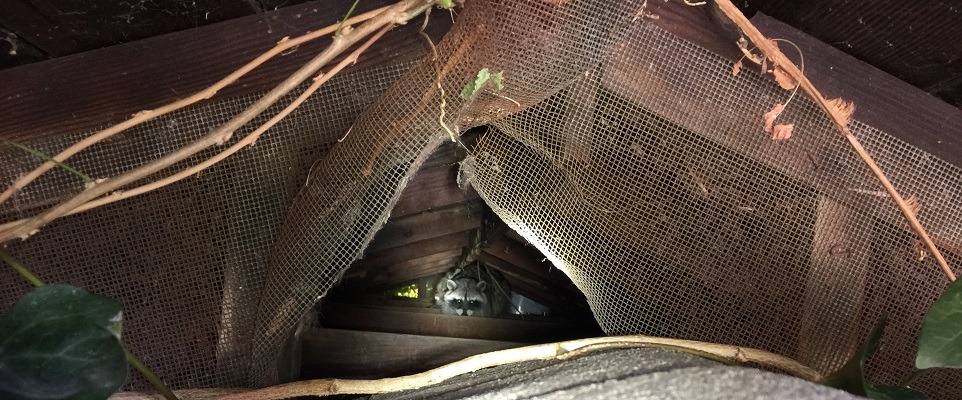
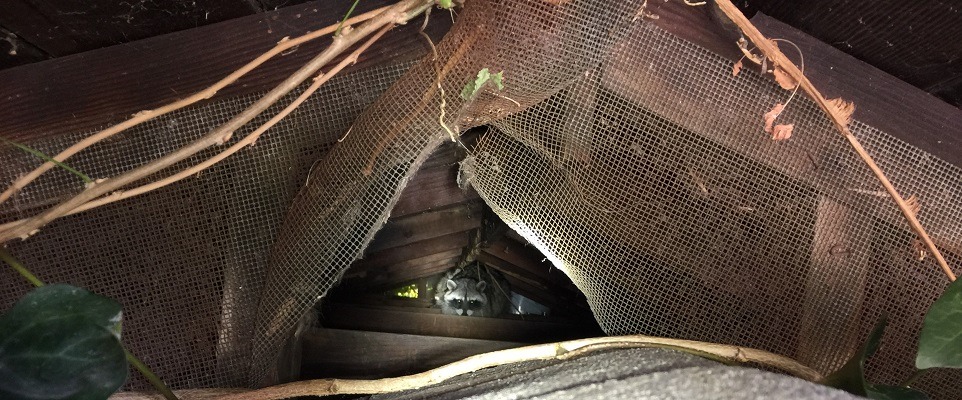
We inspect the roof, eaves, attic, crawlspace, and yard to confirm it’s raccoons, locate entry points, find babies, and document damage. You’ll get a clear explanation of what we found and the options to fix it.
Step 2 · Removal
Humane Trapping & Eviction
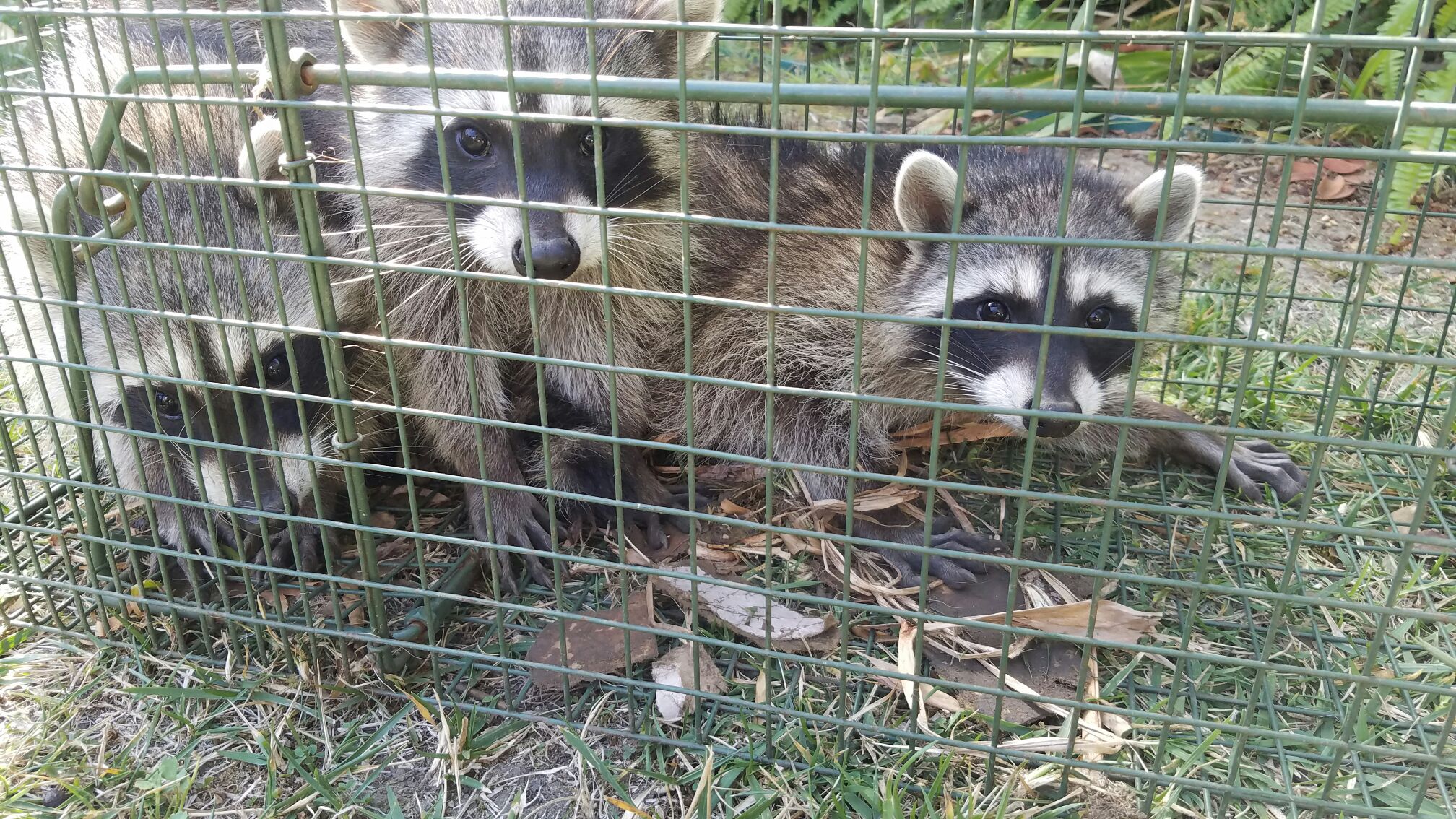
Depending on the case, we use secure cage traps, one-way doors, or during baby season, targeted raccoon pheromone “eviction liquid” to get mom to relocate her babies on her own. All work is performed by licensed trappers in California.
Step 3 · Seal
Exclusion & Raccoon-Proofing
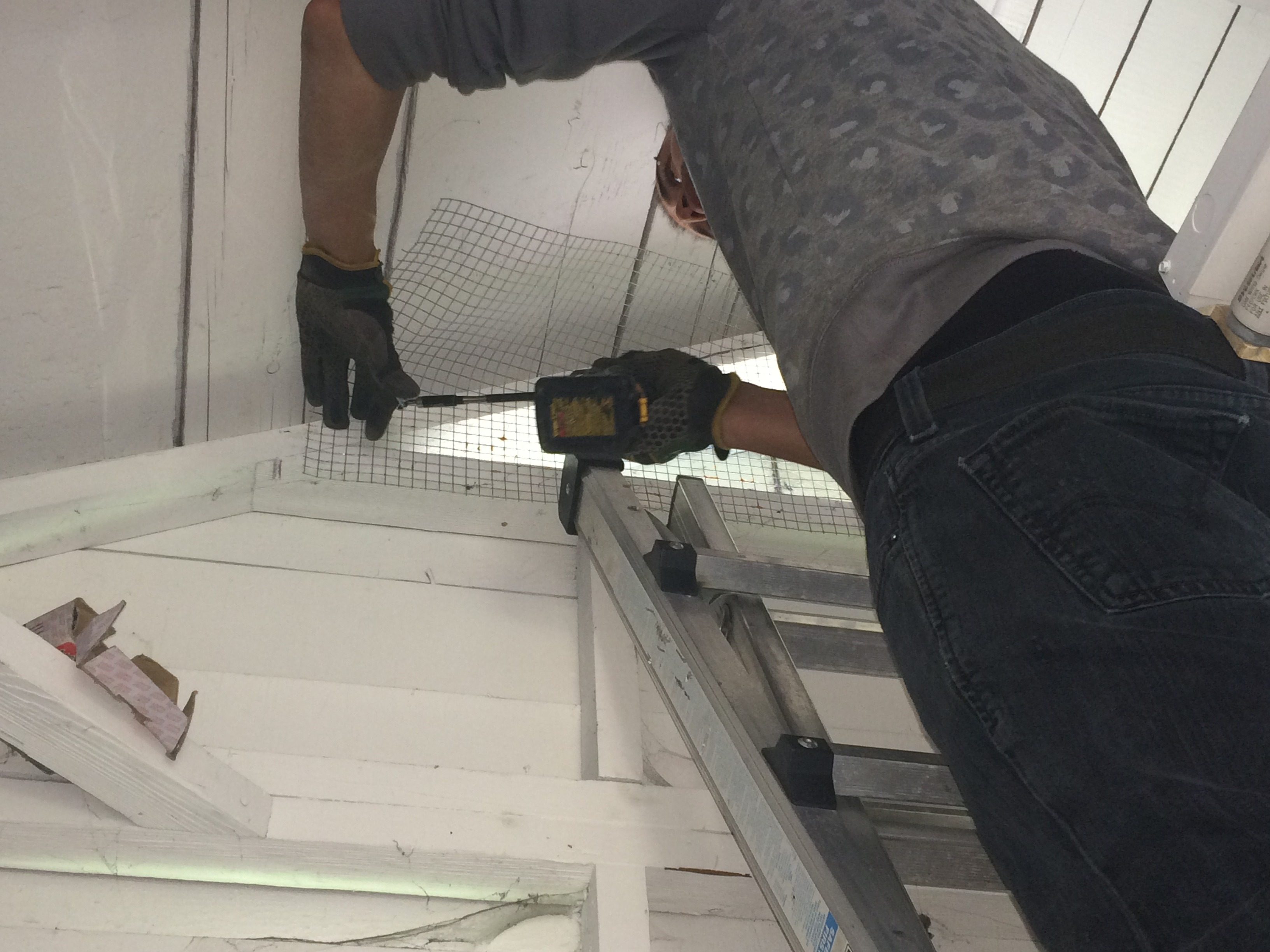
We seal roof vents, soffits, crawlspace screens, and carpenter gaps with chew-resistant materials. For bigger structural fixes, we can outline full wildlife exclusion repairs so raccoons can’t just re-open the same holes.
Step 4 · Clean
Cleanup, Sanitizing & Odor Control
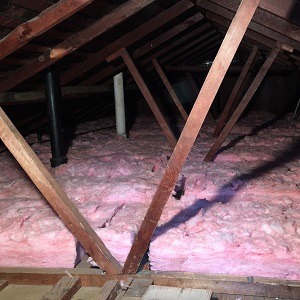
After removal, we can clean and deodorize contaminated insulation, attic floors, and crawlspaces, and recommend restoration if damage is severe. This helps protect your family’s health and keeps new raccoons from being drawn back in by scent.
Attic & Crawlspace Cleanup After Raccoon Damage
Raccoons are heavy and messy. One family can crush large areas of insulation, contaminate framing with droppings and urine, and tear vapor barriers in the crawlspace. Leaving the mess behind means:
- Lingering odors that keep attracting new raccoons.
- Higher risk of fleas, ticks, roundworm, and bacteria.
- Reduced energy efficiency from smashed or removed insulation.
As part of our service, we can provide written estimates for:
- Attic cleanup and partial or full restoration – removal of contaminated insulation, spot or full-area sanitizing, and re-insulation where needed.
- Crawlspace cleaning – removal of droppings, soiled vapor barrier, and odor control in tight, low-ventilation spaces.
Learn more about our structural cleanup work on our dedicated crawlspace cleaning services page (and your attic/insulation page when live).
DIY Raccoon Repellents vs. Reality
There’s no shortage of internet tips for getting rid of raccoons: lights, radios, ammonia, predator urine, spray bottles, gadgets. In real Southern California neighborhoods, most of these don’t do much.
Urban raccoons grew up around trash trucks, sirens, leaf blowers, streetlights, and human smells. A little mothballs or music in the attic doesn’t scare a mother raccoon that’s already nested in your insulation.
California also has strict wildlife laws about how raccoons can be trapped, handled, and relocated. That’s why any trapping or wildlife work should be done by a licensed trapper in the State of California who understands both the animal and the regulations.
If you’d like to understand raccoon behavior, family structure, and why they pick certain homes, we’re building out a homeowner education series in our Wildlife Encyclopedia: Raccoons. The more you know about how raccoons think, the easier it is to see why professional exclusion is worth it.
Raccoon Removal Service Areas in Southern California
Los Angeles & Orange County
We provide raccoon trapping, removal, and attic/crawlspace services across most of the LA Basin and North / Central Orange County, including:
- Los Angeles, East LA, South Bay, San Gabriel Valley
- Pasadena, Glendale, Burbank, the Valley
- Fullerton, Anaheim, Orange, Garden Grove, Santa Ana
Riverside & San Bernardino County
We also handle raccoon issues in Inland Empire neighborhoods, including:
- Riverside, Corona, Norco, Eastvale
- San Bernardino, Redlands, Rialto, Colton
- Many surrounding foothill and canyon communities
Same-day and next-day appointments are often available, especially for raccoons in attics, crawlspaces, and living areas.
Raccoon Removal FAQ
How do I know if it’s raccoons or rats in my attic?
Raccoons are much heavier. You’ll usually hear loud thumps, rolling or dragging sounds, and sometimes growling or chattering. Rats sound lighter and faster, like scratching or scurrying. During an inspection, we confirm the species by droppings, damage patterns, tracks, and entry points.
Can I trap and relocate raccoons myself in California?
In California, raccoon trapping and relocation are regulated. Improper trapping or moving wildlife can be illegal and unsafe. Work should be performed by a licensed trapper who follows state and local laws and uses humane methods. Our team handles permitting, equipment, and removal for you.
What is raccoon “eviction liquid” and does it really work?
During baby season, we sometimes apply a specialized male raccoon pheromone product in the attic. In nature, male raccoons may kill unrelated young; the scent signals danger to a mother raccoon, so she relocates her babies herself. Used correctly and in the right situation, it can clear the attic without separating the family.
How long does raccoon removal usually take?
Simple cases can be resolved in a few nights of trapping. More complex situations — large structures, multiple entry points, or nurseries with babies — can take longer. We’ll outline realistic expectations at the inspection and keep you updated during the process.
Do you remove raccoon droppings and clean the attic or crawlspace?
Yes. After raccoons are gone and openings are sealed, we can clean up droppings, remove contaminated insulation or vapor barrier, sanitize affected areas, and deodorize. This helps reduce health risks and the chances of future wildlife being drawn back by odor.
Will raccoons come back after you trap them?
If entry points stay open, new raccoons can absolutely move in. That’s why every job includes an exclusion plan to secure roof vents, gaps, and crawlspace openings. The combination of removal + sealing + cleanup is what gives you the best long-term result.